ಮಾರ್ಚ್ 5, 2026 · Dr. Aishwarya Ballal ಅವರಿಂದ · 11 ನಿಮಿಷ ಓದು
Ayurvedic Stress Management: Ancient Wisdom for Modern Burnout
Explore Ayurvedic approaches to stress support — from Shirodhara and Abhyanga therapies to adaptogenic herbs like Ashwagandha and Brahmi, pranayama practices, and daily routine guidance.
Reviewed by Dr. Aishwarya Ballal
This article is for general education and should not replace a personal medical consultation, diagnosis, or emergency care.
Stress has become one of the defining health challenges of our time. Whether it’s work pressure, financial worry, relationship strain, or the constant digital bombardment of modern life, our nervous systems are under pressure like never before. Chronic stress can affect how you feel, sleep, digest, focus, and recover.
Modern medicine offers important support for anxiety, depression, and related conditions, and prescribed medication should always be managed with a qualified clinician. Ayurvedic stress management can complement that care by focusing on routine, sleep, digestion, breath, body therapies, and individualized herbal support.
How Ayurveda Understands Stress
In Ayurveda, stress is primarily understood as a Vata dosha imbalance. Vata governs all movement in the body — the movement of thoughts, nerve impulses, breath, blood circulation, and elimination. When Vata becomes aggravated by excessive activity, irregular routines, inadequate rest, or sensory overload, it manifests as anxiety, racing thoughts, insomnia, restlessness, and eventually, burnout.
However, stress doesn’t just affect Vata. Prolonged stress disrupts all three doshas:
- Vata imbalance: Anxiety, insomnia, racing thoughts, restlessness, fear, scattered focus
- Pitta imbalance: Irritability, anger, inflammation, acid reflux, skin flare-ups, perfectionism
- Kapha imbalance: Depression, emotional eating, lethargy, withdrawal, weight gain, hopelessness
The beauty of the Ayurvedic approach is that your treatment is personalized based on how stress manifests in your unique constitution. A Vata-type stress response is treated very differently from a Pitta-type or Kapha-type response.
The Role of Ojas
Ayurveda introduces a concept that modern medicine lacks: Ojas — the subtle essence of vitality, immunity, and mental stability. Ojas is the end product of perfect digestion and healthy tissue formation. When you have strong Ojas, you feel resilient, calm, content, and mentally clear — even in challenging situations.
Chronic stress rapidly depletes Ojas, leaving you vulnerable to illness, emotional instability, and exhaustion. A central goal of Ayurvedic stress management is to rebuild and protect Ojas through nourishing therapies, herbs, diet, and lifestyle practices.
Ayurvedic Therapies for Stress Relief
Shirodhara: The Crown Jewel of Stress Therapy
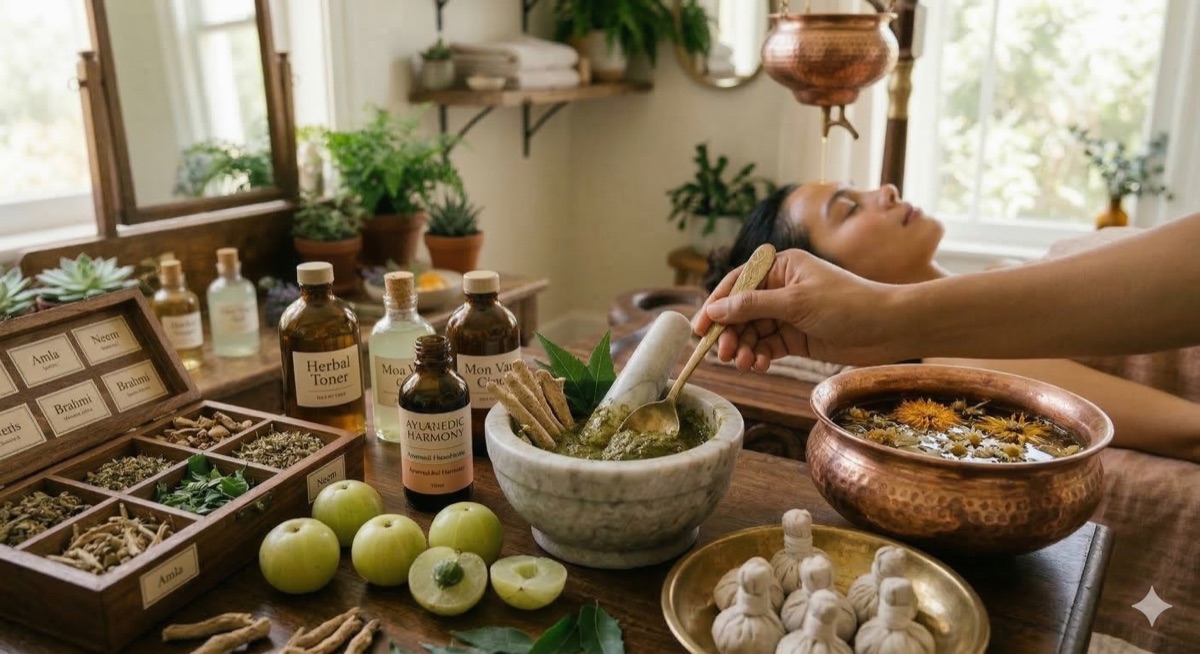
Shirodhara is one of the most recognized Ayurvedic therapies used for stress, anxiety, and sleep support. The treatment involves pouring a continuous, gentle stream of warm medicated oil (or medicated buttermilk, depending on the condition) over the forehead — specifically over the “third eye” region (Ajna chakra).
How it works: The rhythmic flow of warm oil creates a deeply soothing sensation that may help the body shift toward parasympathetic “rest and digest” activity. Some studies suggest Shirodhara may support anxiety scores, sleep quality, and stress-related blood pressure patterns, though individual results vary.
What to expect: A typical Shirodhara session lasts 30-45 minutes. You lie comfortably on a treatment table while warm, herbal-infused oil flows in a steady stream across your forehead. Most patients describe a profound sense of mental stillness — as if the constant chatter of the mind simply dissolves. Many people fall into a deeply restorative sleep-like state during the treatment.
Who benefits most: Shirodhara may be considered for stress, anxiousness, poor sleep, tension headaches, burnout, and high-stress routines after assessment. It is not a replacement for psychiatric, neurological, or emergency care when those are needed.
Abhyanga: Full Body Oil Massage
Abhyanga — the traditional Ayurvedic full-body oil massage — is described in classical texts as one of the most important daily health practices. When performed as a therapeutic treatment, it can be a useful support for stress and tension.
The science behind Abhyanga: Warm, medicated oil massage stimulates the release of oxytocin (the “bonding” hormone) and serotonin while reducing cortisol. The rhythmic, grounding strokes of Abhyanga directly pacify Vata dosha. The warm oil penetrates the skin (the body’s largest organ), nourishing tissues, improving circulation, and calming the nervous system at a cellular level.
Therapeutic benefits for stress:
- Reduces muscle tension and physical manifestations of stress
- Improves sleep quality and duration
- Enhances circulation and lymphatic drainage
- Nourishes and strengthens the nervous system
- Creates a deep sense of groundedness and safety in the body
- Regular Abhyanga builds Ojas over time
Self-Abhyanga (Swaabhyanga): You don’t always need a therapist — daily self-massage with warm sesame oil (for Vata and Kapha types) or coconut oil (for Pitta types) for even 10-15 minutes before your morning shower may support stress resilience over time. Pay special attention to the head, feet, and ears — these areas are often calming when massaged gently.
Nasya: Nasal Therapy for Mental Clarity
Nasya therapy involves the administration of medicated oils or herbal preparations through the nostrils. In Ayurveda, the nose is considered the gateway to the brain. Nasya directly influences the prana (life force) that governs mental function.
For stress and anxiety patterns, Nasya with Brahmi Ghrita (ghee infused with Brahmi) or Anu Taila (a classical nasal oil) may be recommended after assessment. It is traditionally used to support mental clarity, concentration, and emotional balance.
Swedana: Herbal Steam Therapy
Swedana (herbal steam therapy) is often combined with Abhyanga for relaxation support. The warm herbal steam opens the body’s channels (Srotas), eases muscle stiffness, and supports a feeling of lightness and comfort.
Adaptogenic Herbs for Stress
Ayurveda was using “adaptogens” thousands of years before the term was coined. These are herbs that help the body adapt to stress, build resilience, and restore balance.
Ashwagandha (Withania somnifera)
Ashwagandha is one of the most researched Ayurvedic herbs for stress management. Some clinical trials suggest that Ashwagandha root extract may help:
- Support healthier cortisol patterns in some people
- Improve self-assessed stress resilience and quality of life
- Support anxiety and sleep quality
- Support energy and endocrine health when appropriate
- Support cognitive function and memory
Ayurvedic dosage: Traditionally, Ashwagandha is taken as Ashwagandha Churna (powder) mixed with warm milk and ghee before bed. This combination enhances absorption and provides additional Ojas-building benefits. The specific dosage should be determined by your Ayurvedic physician based on your constitution and condition.
Brahmi (Bacopa monnieri)
Brahmi is Ayurveda’s premier brain tonic (Medhya Rasayana). It has a specific affinity for the nervous system and is used to calm mental agitation, improve focus and memory, and promote clarity of thought.
Key benefits for stress:
- Reduces anxiety by modulating serotonin and GABA pathways
- Improves cognitive performance under stress
- Enhances memory and learning capacity
- Promotes restful sleep without drowsiness
- Neuroprotective — protects brain cells from stress-related damage
Brahmi can be taken as a powder, tablet, or as Brahmi Ghrita (medicated ghee). It is often paired with Shirodhara therapy when suitable.
Jatamansi (Nardostachys jatamansi)
Often called “Indian Spikenard,” Jatamansi is a traditional nervine herb in Ayurveda. It may be considered for anxiousness, sleep difficulty, and emotional turbulence under professional guidance. Do not combine herbs with psychiatric medicines or sedatives without medical supervision.
Shankhpushpi (Convolvulus pluricaulis)
Another important Medhya Rasayana, Shankhpushpi is particularly useful for stress-related cognitive decline — when you can’t think clearly, forget things, or feel mentally scattered due to chronic stress. It’s also excellent for children and students experiencing academic stress.
Tulsi (Holy Basil)
Tulsi is revered in India as a sacred plant and is one of the most accessible adaptogens. Regular consumption of Tulsi tea may support the body’s response to physical, metabolic, and psychological stress, along with antioxidant and anti-inflammatory pathways.
Pranayama: The Breath-Stress Connection
Breath is the most direct bridge between the mind and body. Ayurveda and yoga have long recognized that controlling the breath (Pranayama) directly influences the state of the mind and nervous system.
Nadi Shodhana (Alternate Nostril Breathing)
This is one of the simplest breathing practices for stress support. By alternately breathing through the left and right nostrils, Nadi Shodhana may help settle racing thoughts and create a sense of inner steadiness.
Practice: Sit comfortably with spine erect. Close the right nostril with your right thumb, inhale through the left for 4 counts. Close both nostrils and hold for 4 counts. Release the right nostril and exhale for 8 counts. Inhale through the right for 4 counts, hold for 4, exhale left for 8. This is one round. Practice 10-15 rounds daily.
Bhramari (Humming Bee Breath)
The vibration produced during Bhramari may stimulate relaxation pathways and help the body settle. It can be useful for anxiousness, anger, or difficulty winding down. Simply close your ears with your thumbs, place fingers lightly over closed eyes, and exhale while making a low humming sound. Practice 7-11 rounds.
Dirgha Pranayama (Three-Part Breath)
Also called yogic breathing, this involves filling the belly, ribcage, and upper chest sequentially on inhalation, and releasing in reverse order on exhalation. It maximizes oxygen intake, activates the parasympathetic nervous system, and creates a calming anchor for the mind.
Sheetali (Cooling Breath)
Particularly useful for Pitta-type stress (anger, irritability, inflammation). Roll the tongue into a tube, inhale through it, then close the mouth and exhale through the nose. This practice literally cools the body and mind. Practice 10-15 rounds when you feel overheated or irritable.
Dinacharya: The Power of Daily Routine
Perhaps the most practical — and most underestimated — Ayurvedic tool for stress management is Dinacharya, or daily routine. A consistent daily rhythm anchors the nervous system, supports hormonal rhythms, and builds the predictability that the Vata-dominant stressed mind often needs.
Morning Routine (Pratah Charya)
-
Wake before sunrise (ideally 5:30-6:00 AM): The pre-dawn hours are Vata time — waking now aligns you with nature’s rhythm and prevents the heaviness of sleeping into Kapha time (6-10 AM).
-
Eliminate and cleanse: Regular elimination first thing in the morning is a sign of good health. Follow with tongue scraping (removes overnight Ama), oil pulling (swish sesame oil for 5-10 minutes), and brushing teeth.
-
Drink warm water: A cup of warm water with lemon kickstarts digestion and hydrates the body after the night’s fast.
-
Self-massage (Abhyanga): Even 10 minutes of warm oil self-massage grounds Vata, calms the nervous system, and sets a nurturing tone for the day.
-
Exercise or yoga: 20-30 minutes of movement appropriate to your constitution. Yoga is ideal — it combines physical movement, breath work, and mental focus.
-
Pranayama and meditation: 15-20 minutes of breathing practice and seated meditation. This is the single most important investment you can make in your stress resilience.
-
Nourishing breakfast: A warm, cooked breakfast eaten mindfully. Avoid eating while scrolling your phone or watching news.
Evening Routine (Sayam Charya)
-
Eat dinner by 7 PM: A light, warm meal eaten early gives your body time to digest before sleep.
-
Digital sunset: Turn off screens by 8:30-9:00 PM. Blue light disrupts melatonin production and keeps the mind in a stimulated state.
-
Warm milk or herbal tea: A cup of warm milk with cardamom and nutmeg, or a calming herbal tea (chamomile, Brahmi, or Ashwagandha), signals the body that it’s time to wind down.
-
Foot massage: Apply warm sesame oil to the soles of your feet and massage gently. The feet have nerve endings connected to every organ — this simple practice is remarkably calming.
-
Gratitude or journaling: Spend 5 minutes reflecting on the day. This mental processing helps the mind release the day’s events before sleep.
-
Lights out by 10 PM: The 10 PM - 2 AM window is Pitta time, when the body performs critical repair and detoxification. Sleeping through this window is essential for recovery from stress.
When Stress Becomes More Than Stress
While Ayurveda can support stress management, it’s important to recognize when professional help is needed. Seek medical or mental-health support if you experience:
- Persistent feelings of hopelessness or worthlessness
- Thoughts of self-harm
- Inability to perform daily functions for more than two weeks
- Panic attacks that are increasing in frequency
- Complete loss of appetite or excessive eating for prolonged periods
- Substance use to cope with stress
Ayurvedic treatment can work alongside conventional mental health support. At Shathayu Ayurveda Clinic, Dr. Aishwarya Ballal works collaboratively with patients and their healthcare providers to create integrated care plans.
Building Long-Term Resilience
The ultimate goal of Ayurvedic stress management isn’t just temporary calm — it’s to change your relationship with stress. Through the consistent practice of Dinacharya, regular Pranayama, Ojas-building nutrition, and suitable Panchakarma cleansing, many people build a steadier foundation for calm and resilience.
Stress will always be part of life. But with Ayurveda’s wisdom, you can learn to meet it from a place of strength rather than depletion.
Feeling overwhelmed by stress? Book a consultation with Dr. Aishwarya Ballal for a personalized Ayurvedic stress management plan, or contact us via WhatsApp to learn more about our therapies.
ವೈದ್ಯಕೀಯ ಹಕ್ಕುತ್ಯಾಗ
ಈ ವೆಬ್ಸೈಟ್ನಲ್ಲಿ ಒದಗಿಸಲಾದ ಮಾಹಿತಿಯು ಶೈಕ್ಷಣಿಕ ಉದ್ದೇಶಗಳಿಗೆ ಮಾತ್ರ ಮತ್ತು ವೃತ್ತಿಪರ ವೈದ್ಯಕೀಯ ಸಲಹೆ, ರೋಗನಿರ್ಣಯ ಅಥವಾ ಚಿಕಿತ್ಸೆಗೆ ಬದಲಿಯಾಗಿ ಉದ್ದೇಶಿಸಲಾಗಿಲ್ಲ. ಆಯುರ್ವೇದ ಚಿಕಿತ್ಸೆಗಳು ಪೂರಕ ಸ್ವರೂಪದವು. ಯಾವುದೇ ಹೊಸ ಚಿಕಿತ್ಸಾ ಕಾರ್ಯಕ್ರಮವನ್ನು ಪ್ರಾರಂಭಿಸುವ ಮೊದಲು ನಿಮ್ಮ ಪ್ರಾಥಮಿಕ ವೈದ್ಯರನ್ನು ಸಂಪರ್ಕಿಸಿ. ಫಲಿತಾಂಶಗಳು ವ್ಯಕ್ತಿಯಿಂದ ವ್ಯಕ್ತಿಗೆ ಬದಲಾಗಬಹುದು.