8 मार्च 2026 · Dr. Aishwarya Ballal द्वारा · 10 मिनट पढ़ें
Shirodhara Therapy: Benefits, Procedure & What to Expect
Discover how Shirodhara — the ancient Ayurvedic therapy of warm oil poured on the forehead — may support stress, anxiety, sleep, and deep relaxation.
Reviewed by Dr. Aishwarya Ballal
This article is for general education and should not replace a personal medical consultation, diagnosis, or emergency care.
If you’ve ever wished you could simply switch off the noise in your head — the endless loop of worries, to-do lists, and restless thoughts — Shirodhara may be worth discussing with an Ayurvedic physician. Often described as one of the most deeply relaxing experiences in Ayurveda, Shirodhara has been used for thousands of years to calm the mind and support inner stillness.
Let me walk you through everything you need to know — what it is, how it works, who it’s for, and what to expect when you come in for a session.
What Is Shirodhara?
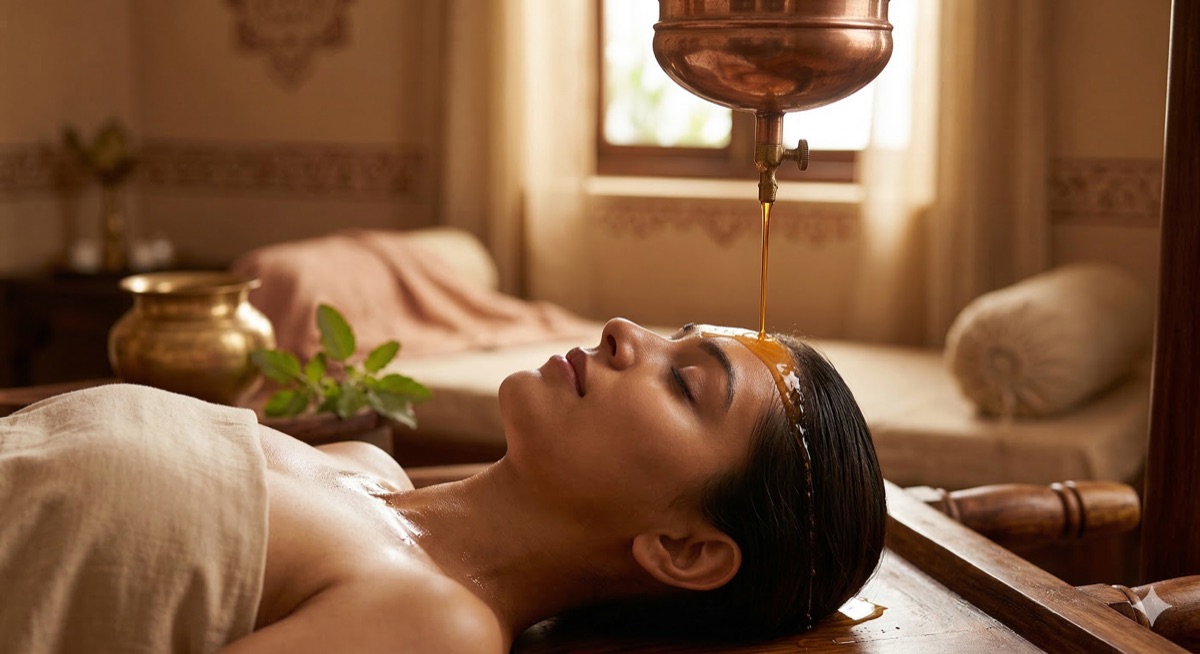
The word Shirodhara is derived from two Sanskrit terms: “Shiro” (head) and “Dhara” (flow or stream). It literally means “the flowing of liquid over the head.” In practice, Shirodhara involves pouring a continuous, gentle stream of warm medicated liquid — most commonly herbal oil — over the forehead, specifically targeting the Ajna Marma (the “third eye” point between the eyebrows).
This region is the seat of Sthapani Marma, a critical junction point that governs the mind, sensory perception, and the pituitary gland. By delivering a steady, rhythmic flow of warm liquid to this point, Shirodhara induces a state of deep psychosomatic relaxation that is difficult to achieve through any other means.
Described in the classical texts including Charaka Samhita and Ashtanga Hridaya, Shirodhara falls under Murdha Taila (head oil therapies) and Bahya Snehana (external oleation), and holds a special place in the management of neurological and psychological conditions.
How the Procedure Works: Step by Step
Here is what happens during a typical session at Shathayu Ayurveda Clinic:
1. Pre-Treatment Consultation
Before your first session, I will assess your Prakriti (body constitution), Vikriti (current imbalance), and specific health concerns. This determines the type of liquid, temperature, session duration, and number of sessions needed. Shirodhara is not a one-size-fits-all therapy — personalization is essential.
2. Preparation (Purvakarma)
You will lie comfortably on your back on the treatment table. Your eyes are gently covered with a cotton pad or cloth to protect them from the flowing liquid and to help you turn your focus inward. A gentle Abhyanga (oil massage) of the head, neck, and shoulders is often performed first to relax the muscles and open the energy channels.
3. The Dhara (Main Procedure)
A specially designed vessel called a Dhara Patra is suspended approximately four inches above your forehead. The warm medicated liquid flows through a small opening at its base, creating a thin, continuous stream.
The therapist guides this stream in a slow, rhythmic, oscillating motion across the forehead — from one temple to the other — maintaining a steady height, temperature, and pressure throughout. The liquid cascades over the scalp and is collected below, rewarmed, and recirculated.
The key to Shirodhara’s calming effect is the unbroken, rhythmic flow. This constant sensory stimulus can produce a deeply meditative state. Some patients experience a shift from active thinking into a more relaxed, sleep-adjacent state.
4. Post-Treatment Rest (Paschatkarma)
After the flow ends, you will rest quietly for 10 to 15 minutes. Your nervous system is in a deeply receptive, parasympathetic state, and this rest allows it to integrate the treatment. A gentle head wipe removes excess oil, and you may be given warm herbal tea.
Types of Shirodhara
The type of liquid is chosen based on your constitution, the condition being treated, and the season. There are four primary types:
Taila Dhara (Oil Shirodhara)
This is the most common form. Warm medicated sesame oil or herbal oils infused with Brahmi, Bala, Ashwagandha, or other nervine herbs are used. Taila Dhara is best suited for:
- Vata imbalances — anxiety, insomnia, restlessness, dryness
- Neurological conditions — headaches, migraines, facial palsy
- Degenerative conditions of the nervous system
- Deep stress and burnout
The warm, heavy, unctuous quality of medicated oil directly pacifies aggravated Vata dosha and deeply nourishes the nervous tissue (Majja Dhatu).
Takra Dhara (Buttermilk Shirodhara)
Medicated buttermilk — typically infused with cooling herbs like Amalaki or Musta — is used in Takra Dhara. This type is often chosen for:
- Pitta imbalances — irritability, anger, burning sensations
- Psoriasis and other inflammatory skin conditions of the scalp
- Premature greying of hair
- Hypertension and acid reflux linked to stress
- Excessive heat in the body and mind
Takra Dhara has a cooling, soothing effect and is often prescribed during the hot summer months or for patients with a strong Pitta constitution.
Ksheera Dhara (Milk Shirodhara)
Medicated milk — often boiled with Shatavari, Bala, or Ashwagandha — is used in Ksheera Dhara. This is a nourishing, rejuvenating form of Shirodhara, ideal for:
- Vata-Pitta dual imbalances
- Chronic headaches with a burning quality
- Insomnia accompanied by mental restlessness
- General debility and nervous exhaustion
- Patients who are very thin, depleted, or recovering from illness
Ksheera Dhara is gentler than oil Shirodhara and is an excellent choice for sensitive individuals.
Kwatha Dhara (Decoction Shirodhara)
A warm herbal decoction (Kashaya) is used — for example, Dashamoola for Vata disorders or Triphala for Kapha-related congestion. Kwatha Dhara is used for:
- Kapha predominant conditions — heaviness, congestion, lethargy
- Certain scalp conditions
- Conditions where oil application is not suitable
Health Benefits of Shirodhara
Beyond relaxation, Shirodhara is a traditional therapeutic intervention with benefits that are being explored by modern research.
Stress and Anxiety Relief
Shirodhara may support chronic stress and anxiety patterns as part of a broader care plan. The rhythmic oil flow may help the body shift toward parasympathetic relaxation. Patients often report a calmer mind and reduced emotional reactivity after sessions, though outcomes vary.
Insomnia and Sleep Disorders
If you struggle with falling asleep, staying asleep, or waking unrefreshed, Shirodhara may support your sleep plan. The therapy is traditionally used to calm an overactive mind before sleep. Many patients describe post-Shirodhara sleep as deeper and more restorative.
Headaches and Migraines
Shirodhara may be used as supportive care for tension headaches and migraine patterns after assessment. The warm oil can relax the muscles of the forehead, temples, and scalp and may support local circulation. Recurrent, severe, sudden, or unusual headaches should be evaluated medically.
Mental Clarity and Cognitive Function
The therapy nourishes Majja Dhatu (nervous tissue) and enhances the flow of Prana Vayu (the vital energy governing mental function). Patients report improved concentration, sharper memory, and a sense of mental spaciousness after a course of Shirodhara — particularly valuable for professionals experiencing mental fatigue or brain fog.
Hair and Scalp Health
The medicated oils nourish the hair roots and scalp. Regular sessions may support dry scalp, dandruff-prone scalp, and overall scalp comfort when suitable.
Emotional Balance
Shirodhara can create space for emotional settling. Some patients experience a gentle emotional release during or after the therapy — a sense of letting go they did not know they were holding onto. Over time, it may support greater emotional resilience and equanimity.
Support for Neurological Conditions
In clinical Ayurvedic practice, Shirodhara may be used only as an adjunct therapy for neurological concerns such as facial palsy, post-stroke rehabilitation, or Parkinson’s disease. These conditions require diagnosis and ongoing medical care; Ayurvedic support should be coordinated with the treating physician.
Who Should Get Shirodhara?
Shirodhara is beneficial for a wide range of individuals:
- People experiencing chronic stress, anxiety, or burnout
- Those struggling with insomnia or poor sleep quality
- Anyone suffering from frequent headaches or migraines
- Individuals dealing with depression or emotional instability
- Professionals facing mental fatigue, brain fog, or difficulty concentrating
- People going through major life transitions or periods of grief
- Patients with hypertension linked to stress
- Anyone seeking deep relaxation and mental rejuvenation
Who Should Avoid Shirodhara?
While Shirodhara is generally gentle when performed correctly, there are specific contraindications:
- Active fever or acute infections — the body needs to resolve the acute condition first
- Recent head or neck injuries — wait until medically cleared
- Brain tumors or intracranial pressure issues — medical clearance is essential
- Severe skin conditions on the forehead — open wounds, active rashes, or burns in the treatment area
- Third trimester of pregnancy — Shirodhara is generally avoided in late pregnancy
- Nausea or vomiting — the supine position can worsen these symptoms
- Extreme Kapha aggravation — in cases of severe congestion or sinusitis, oil Shirodhara may be contraindicated (though Kwatha Dhara may be appropriate)
- Very young children — typically recommended for adults and older adolescents
Always consult with a qualified Ayurvedic physician before undergoing Shirodhara if you have pre-existing medical conditions.
What to Expect During Your First Session
If you have never experienced Shirodhara before, here is what your first visit will look like:
Before the session:
- Wear comfortable clothing you don’t mind getting oil on (we provide gowns)
- Avoid heavy meals for at least two hours before your appointment
- Try not to rush in straight from a hectic schedule
During the session:
- The treatment room is warm, quiet, and softly lit to create a calming atmosphere
- You will lie on your back with your eyes covered
- You will feel warm oil begin to flow gently across your forehead — the sensation is deeply soothing and unusual in the best way
- Your mind may initially be busy, but within a few minutes, most people experience a noticeable quieting of thoughts
- Some people drift into a sleep-like state, others remain aware but deeply relaxed — both responses are perfectly normal
- A typical session lasts 30 to 45 minutes for the Dhara itself, plus preparation and rest time
After the session:
- You will feel deeply calm, possibly a bit drowsy — this is normal
- Avoid washing your hair immediately; I recommend leaving the oil on for at least 2 to 3 hours, or overnight if possible
- Drink warm water or herbal tea
- Avoid loud environments, screen time, and strenuous activity for the rest of the day
- Many patients describe the hours following Shirodhara as a state of “blissful quiet”
How Many Sessions Are Typically Needed?
The number of sessions depends entirely on your condition and treatment goals:
- For general relaxation and stress support: A single session may provide noticeable benefit, but a course of 3 to 5 sessions over one to two weeks may be recommended for steadier support.
- For chronic insomnia or anxiety patterns: A course of 7 to 14 sessions may be recommended as part of a comprehensive treatment plan.
- For neurological concerns: Longer courses may be considered only after assessment, often combined with other therapies and coordinated medical care.
- For maintenance and prevention: Once you have completed an initial course, periodic sessions — once a week or once a month — help maintain the benefits and build long-term resilience.
During your consultation, I will recommend a plan tailored to your needs. The benefits of Shirodhara are often cumulative, with each session helping the body settle more easily.
Experience Shirodhara at Shathayu Ayurveda
In a world that constantly demands more of our attention and energy, Shirodhara offers something rare — a complete, effortless surrender into stillness. It is not something you do; it is something you allow to happen. And in that allowing, the body can rest more deeply.
If you are ready to experience this therapy for yourself, I would love to guide you through it.
Book your Shirodhara consultation with Dr. Aishwarya Ballal at Shathayu Ayurveda Clinic, or reach out on WhatsApp to ask any questions and schedule your first session.
चिकित्सा अस्वीकरण
इस वेबसाइट पर दी गई जानकारी केवल शैक्षिक उद्देश्यों के लिए है और पेशेवर चिकित्सा सलाह, निदान या उपचार का विकल्प नहीं है. आयुर्वेदिक उपचार पूरक प्रकृति के हैं. कोई भी नया उपचार शुरू करने से पहले अपने प्राथमिक चिकित्सक से परामर्श करें, विशेषकर यदि आपकी कोई पूर्व चिकित्सा स्थिति है या आप दवा ले रहे हैं. परिणाम व्यक्ति-दर-व्यक्ति भिन्न हो सकते हैं.