15 February 2026 · By Dr. Aishwarya Ballal · 13 min read
Ayurvedic Treatment for Joint Pain & Arthritis: A Natural Approach That Works
Learn how Ayurveda treats joint pain, arthritis, and stiffness naturally through Panchakarma therapies, herbal medicines, diet changes, and lifestyle modifications.
If you wake up every morning with stiff, aching joints — or if simple tasks like climbing stairs, opening a jar, or sitting cross-legged have become painful ordeals — you are not alone. Joint pain and arthritis are among the most common reasons people seek medical help, and unfortunately, conventional treatment often means a lifelong dependence on painkillers and anti-inflammatory drugs that bring their own set of side effects.
Ayurveda offers a fundamentally different path. Rather than merely suppressing pain, the Ayurvedic approach identifies and treats the root causes of joint degeneration and inflammation — restoring mobility, reducing pain, and in many cases, slowing or reversing the degenerative process itself.
Understanding Joint Pain Through Ayurveda
In Ayurveda, healthy joints depend on three things: proper lubrication of the joint space, strong and well-nourished bone tissue (Asthi Dhatu), and free-flowing channels that deliver nutrition to the joints and remove waste. When any of these factors are disrupted, joint disease follows.
The classical Ayurvedic texts describe two primary conditions that cover most forms of joint pain and arthritis:
Sandhivata (Degenerative Joint Disease)
Sandhivata is the Ayurvedic equivalent of osteoarthritis — the wear-and-tear type of joint degeneration that becomes increasingly common with age. The word itself tells you what’s happening: “Sandhi” (joint) + “Vata” (the dosha governing movement and dryness).
In Sandhivata, aggravated Vata dosha dries out the natural lubrication (Shleshaka Kapha) within the joint. The synovial fluid diminishes, cartilage erodes, and bone begins to rub against bone. You experience pain on movement, crackling or crepitus sounds in the joint, swelling, and progressively reduced range of motion.
This condition most commonly affects the knees, hips, spine, and small joints of the hands — particularly in people over 45, those with physically demanding occupations, or individuals with a predominantly Vata constitution.
Amavata (Inflammatory Arthritis)
Amavata is the Ayurvedic understanding of inflammatory and autoimmune joint diseases, including rheumatoid arthritis. Here, the culprit is not just Vata but the combination of Ama (metabolic toxins) and aggravated Vata dosha.
When digestive fire (Agni) is weak, food is not properly metabolized, producing Ama — a sticky, heavy toxic substance. This Ama circulates through the body and has a particular affinity for joints, where it deposits in the synovial space and triggers inflammation. The result is painful, swollen, stiff joints — often symmetrically affecting multiple joints, with characteristic morning stiffness that improves as the day progresses.
Amavata is considered more complex than Sandhivata because it involves both a systemic metabolic problem (Ama production) and a local joint problem (inflammation and destruction). This is why treating the digestion is just as important as treating the joints themselves.
The Role of Vata Dosha in Joint Health
Among the three doshas, Vata plays the central role in joint disease. Vata governs all movement in the body, including the circulation of nutrients to tissues and the removal of waste products. Its qualities — dry, light, cold, rough, and mobile — are the exact opposite of what joints need to stay healthy.
When Vata becomes aggravated through aging, excessive physical activity, cold and dry weather, irregular eating habits, stress, or insufficient nourishment, it directly impacts joint health by:
- Drying out synovial fluid — reducing the cushioning and lubrication within joints
- Depleting bone tissue (Asthi Dhatu) — Vata and Asthi Dhatu have an inverse relationship in Ayurveda; as Vata increases, bone tissue weakens
- Disturbing circulation to the joints — resulting in poor nourishment and waste accumulation
- Increasing pain sensitivity — Vata is the only dosha that produces pain, and aggravated Vata amplifies the pain experience
This is why Vata-pacifying therapies form the backbone of Ayurvedic joint treatment, regardless of whether the condition is Sandhivata or Amavata.
Panchakarma Treatments for Joint Pain
Panchakarma therapies are the most powerful tools Ayurveda has for treating chronic joint problems. These are not superficial spa treatments — they are structured medical procedures that work at the tissue level to restore joint health.
Janu Basti (Knee Treatment)
Janu Basti is a specialized localized treatment for knee pain and stiffness. A dam made from black gram dough is built around the knee joint, and warm medicated oil is pooled within it for 30-45 minutes. The sustained warmth and deep penetration of the herbal oil nourish the knee cartilage, reduce inflammation, improve synovial fluid production, and relieve pain. This therapy is remarkably effective for osteoarthritis of the knee, ligament injuries, and post-surgical knee rehabilitation.
Kati Basti (Lower Back Treatment)
The same principle applied to the lower back, Kati Basti is invaluable for lumbar spondylosis, disc problems, sciatica, and lower back stiffness. Warm medicated oil is retained over the lumbosacral area, deeply nourishing the spinal joints, intervertebral discs, and surrounding muscles. Patients often report significant relief even after the first session.
Abhyanga (Therapeutic Oil Massage)
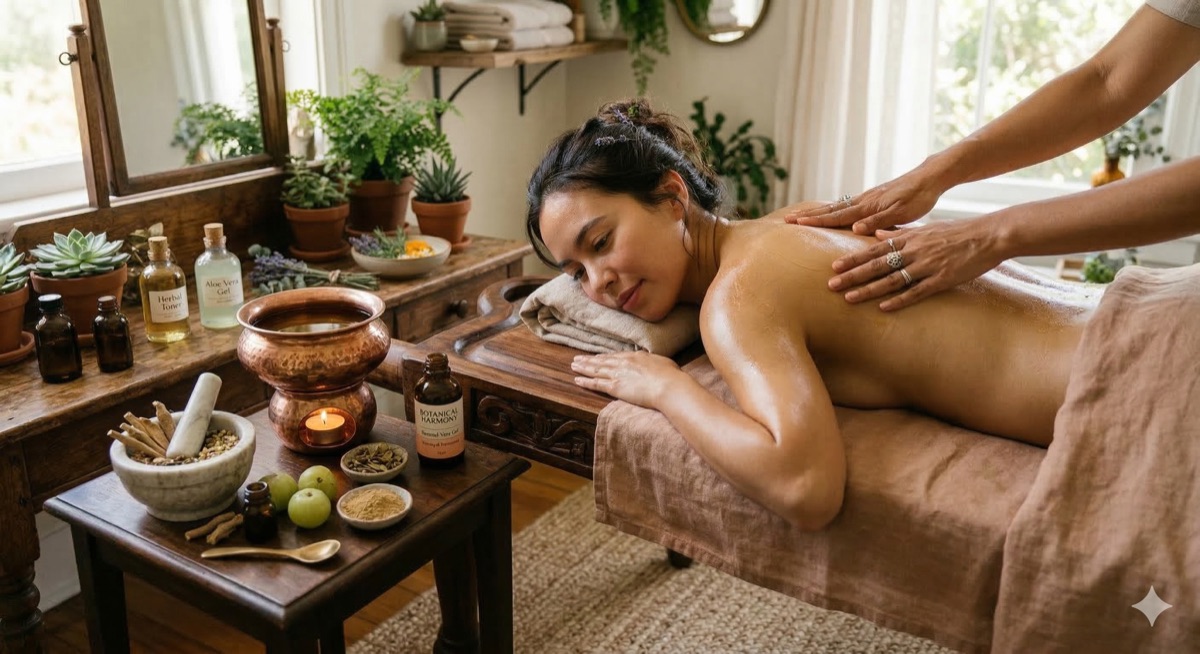
Abhyanga — full-body massage with warm medicated oils — is the foundational treatment for all Vata disorders, including joint disease. The oils used are specifically chosen based on the type and severity of joint involvement. For Sandhivata, Dhanwantharam Taila or Ksheerabala Taila are commonly used; for Amavata, oils with anti-inflammatory herbs like Prasarini or Sahacharadi are preferred.
Abhyanga works by deeply lubricating tissues, improving blood and lymphatic circulation to the joints, loosening toxins from their tissue deposits, and calming the nervous system. When performed regularly as part of a treatment protocol, it creates a cumulative healing effect that is profound.
Swedana (Steam Therapy)
Swedana (therapeutic steam or fomentation therapy) is almost always combined with Abhyanga. After the oil massage loosens toxins and lubricates tissues, steam therapy opens the body’s channels (Srotas) and facilitates the movement of dislodged toxins toward the digestive tract for elimination. For joint pain, localized steam applications — such as Nadi Sweda (directed steam) or Patra Pinda Sweda (herbal bolus massage) — provide targeted relief to affected joints while reducing stiffness and swelling.
Patra Pinda Sweda deserves special mention. In this therapy, boluses filled with anti-inflammatory herbal leaves, medicated oils, and rock salt are heated and rhythmically pressed over painful joints. The combination of heat, herbal medicine, and pressure provides immediate pain relief and improves joint mobility.
Basti (Medicated Enema Therapy)
Basti is considered the king of all Vata treatments in Ayurveda, and for good reason. Since Vata’s primary seat is in the colon, Basti therapy directly pacifies Vata at its source. For joint diseases, a course of Basti — typically alternating between oil-based (Anuvasana Basti) and decoction-based (Kashaya Basti) enemas over 8-16 days — produces deep systemic changes that no external therapy alone can achieve.
Basti nourishes bone tissue from within, improves calcium absorption, reduces systemic inflammation, and corrects the fundamental Vata imbalance that drives joint degeneration. For chronic arthritis patients, Basti is often the single most transformative treatment in the entire protocol.
Herbal Medicines for Joint Health
Ayurvedic herbal medicines work both internally and externally to support joint repair, reduce inflammation, and slow degeneration.
Guggulu (Commiphora mukul) Guggulu is the cornerstone herb for musculoskeletal conditions in Ayurveda. Its powerful anti-inflammatory, analgesic, and tissue-scraping (Lekhana) properties make it effective against both Sandhivata and Amavata. Classical formulations like Yogaraja Guggulu, Simhanada Guggulu, and Kaisora Guggulu are prescribed based on the specific type and nature of joint involvement.
Shallaki (Boswellia serrata) Also known as Indian frankincense, Shallaki is one of the most well-researched Ayurvedic herbs for arthritis. Its boswellic acids inhibit inflammatory enzymes (5-lipoxygenase), reduce joint swelling, and protect cartilage from degradation. Multiple clinical studies have validated its effectiveness for osteoarthritis, particularly of the knee.
Ashwagandha (Withania somnifera) This renowned adaptogenic herb strengthens bone tissue, reduces stress-related inflammation, and supports the body’s natural repair processes. Ashwagandha is particularly valuable for patients where stress and depleted vitality are contributing to joint degeneration.
Dashamoola A classical combination of ten medicinal roots, Dashamoola is a powerful anti-inflammatory and Vata-pacifying formulation. It is used both internally (as a decoction or in Basti) and externally (in fomentation therapies) for chronic joint pain, sciatica, and muscular stiffness.
Eranda (Castor Oil) Castor oil holds a special place in Ayurvedic joint treatment. Taken internally in small doses (5-10 ml with warm milk or water), it acts as a gentle purgative that clears Ama from the system while simultaneously lubricating the joints and bowel. Externally, warm castor oil packs over painful joints provide soothing relief and reduce swelling. Its efficacy in Amavata is particularly well-documented in classical texts.
Anti-Inflammatory Ayurvedic Diet for Joints
What you eat directly impacts the level of inflammation in your body and the health of your joints. An Ayurvedic diet for joint pain focuses on reducing Ama, pacifying Vata, and providing the building blocks for tissue repair.
Foods to Emphasize:
- Warm, cooked, easily digestible meals — cold and raw foods increase Vata and are harder on weakened Agni
- Healthy fats: Ghee (clarified butter) is essential — it lubricates joints from within and carries herbal medicines deeper into tissues. Sesame oil is also excellent for Vata conditions
- Anti-inflammatory spices: Turmeric, ginger, cumin, fenugreek seeds, garlic, and black pepper should feature in your daily cooking
- Bone-nourishing foods: Sesame seeds (rich in calcium), drumstick (Moringa), ragi (finger millet), and green leafy vegetables
- Warm soups and broths: Particularly mung dal soup with anti-inflammatory spices — light, nourishing, and easy on digestion
- Adequate hydration: Warm water throughout the day, ginger-turmeric tea, or cumin-coriander-fennel tea
Foods to Reduce or Avoid:
- Cold foods and beverages, ice cream, and refrigerated leftovers
- Excessive dry, rough, or light foods (popcorn, crackers, raw salads in excess)
- Fermented foods in excess — they can increase Ama in sensitive individuals
- Refined sugar, processed foods, and deep-fried items — all of which promote inflammation
- Nightshade vegetables (tomatoes, potatoes, eggplant, bell peppers) — some arthritis patients find they worsen joint inflammation
- Curd/yogurt at night — increases Kapha and can worsen joint swelling
A Simple Rule: If a meal leaves you feeling heavy, bloated, or sluggish, it is producing Ama. If it leaves you feeling light, energized, and satisfied, your Agni is working well.
Yoga and Gentle Exercises for Joint Health
Movement is medicine for joints — but the right kind and amount matter enormously. Ayurveda recommends gentle, consistent exercise that lubricates joints without straining them.
Recommended Yoga Poses:
- Trikonasana (Triangle Pose) — strengthens and stretches the knees, hips, and spine
- Virabhadrasana (Warrior Poses) — builds strength around the knee and hip joints without impact
- Setu Bandhasana (Bridge Pose) — opens the hips, strengthens the spine, and improves circulation to the lower back
- Pawanmuktasana (Wind-Relieving Pose) — specifically designed to release Vata from joints; excellent for knee and hip stiffness
- Marjariasana-Bitilasana (Cat-Cow) — mobilizes every vertebral joint and relieves spinal stiffness
- Gentle Surya Namaskar — performed slowly and mindfully, it provides a full-body joint mobilization routine
Other Beneficial Activities:
- Walking (30 minutes daily on even ground) — the simplest and most joint-friendly exercise
- Swimming — buoyancy takes pressure off joints while providing full-range movement
- Cycling on a stationary bike — excellent for knee arthritis as it strengthens the quadriceps without impact
Avoid: High-impact activities like running on hard surfaces, jumping exercises, and heavy weight lifting that puts excessive stress on already compromised joints. Also avoid prolonged sitting or standing in one position.
Lifestyle Modifications That Make a Real Difference
Beyond specific treatments, daily habits play a significant role in managing and preventing joint disease.
- Maintain a consistent daily routine (Dinacharya): Regularity pacifies Vata. Wake, eat, sleep, and exercise at roughly the same times each day.
- Stay warm: Cold and damp weather aggravates Vata and worsens joint pain. Keep your joints covered, use warm clothing, and avoid air conditioning blowing directly on your body.
- Daily self-massage (Abhyanga): Even 10-15 minutes of self-massage with warm sesame oil before your bath significantly reduces stiffness and pain over time. Pay special attention to your knees, hips, and spine.
- Manage stress: Chronic stress elevates cortisol and inflammatory markers, worsening joint inflammation. Pranayama (breathing exercises), meditation, and adequate sleep are non-negotiable.
- Avoid suppressing natural urges: In Ayurveda, suppressing the urges to urinate, defecate, or pass gas directly aggravates Vata and can worsen joint conditions.
- Maintain healthy body weight: Every kilogram of excess weight places approximately four kilograms of additional stress on your knee joints. Even modest weight loss can significantly reduce knee pain.
What Kind of Results Can You Expect?
Patients frequently ask me how long Ayurvedic treatment takes for joint pain and arthritis. The honest answer is that it depends on the nature and chronicity of the condition, but here is a realistic timeline based on what I observe in clinical practice:
- Mild to moderate joint pain and stiffness: Noticeable improvement within 2-4 weeks of starting treatment, with significant relief by 6-8 weeks.
- Chronic osteoarthritis (Sandhivata): Meaningful reduction in pain and improvement in mobility typically begins within 4-6 weeks. A full course of treatment spanning 3-6 months is usually recommended for lasting results.
- Inflammatory arthritis (Amavata): This requires patience. Initial improvement in pain and swelling is often seen within 4-6 weeks, but comprehensive management spanning 6-12 months is necessary to address the underlying metabolic dysfunction and prevent recurrence.
What I find most rewarding is that Ayurvedic treatment doesn’t just reduce pain scores — it restores function. Patients who came in unable to sit on the floor are performing Namaskar again. People who had given up walking return to their daily morning walks. This functional recovery, coupled with the absence of drug side effects, is what makes the Ayurvedic approach so meaningful.
The key is consistency. The herbal medicines, dietary changes, lifestyle modifications, and periodic Panchakarma treatments work together as a system. When patients commit to the complete protocol rather than cherry-picking one or two elements, the results speak for themselves.
The Shathayu Approach to Joint Care
At Shathayu Ayurveda Clinic, every patient with joint pain undergoes a detailed assessment — including Prakriti (constitution) analysis, Nadi Pariksha (pulse diagnosis), evaluation of Agni status, and a thorough understanding of the joint pathology. Based on this, I create a personalized treatment plan that combines the appropriate Panchakarma therapies, herbal medicines, dietary guidance, and exercise recommendations.
Whether you’re dealing with early morning knee stiffness, chronic back pain, or a long-standing diagnosis of rheumatoid arthritis, there is an Ayurvedic approach that can help. The sooner you begin, the more effectively we can protect your joints and restore your quality of life.
Living with joint pain or arthritis? Book a consultation with Dr. Aishwarya Ballal to receive a personalized Ayurvedic treatment plan, or reach out via WhatsApp to discuss how we can help you move freely again.